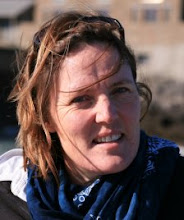
It's Thursday! The week has slipped by very quickly and there's been hardly the moment to update the blog. I was up early on Wednesday to try to get you more news, but there was no connectivity, so my plans were scuppered. I am hoping to get some news in now.
We're working in Trilokpuri, a slum on the east of Delhi, and across the Yamuna river. It's not an area I've been to before and the drive out takes us past India Gate and the impressive roads and fairly organized traffic, and across the wide Yamuna river which I believe is a dead river. There are canals or tributaries running into the Yamuna and all are so unbelievably heavily polluted. One feels that a week of heavy focused litter collecting would breathe a new life in everywhere. In fact this is the general comment from those who've not been before. Why do people just discard litter as they walk? There is in general no sense of tidying up after you and with such a massive population, the litter problem is really quite something.
So, to the slum. Our clinic as two stories - 4 rooms downstairs, and three rooms upstairs. The second floor was previously occupied, but unused and only recently given to Asha. Unlike previous trips, we did not have to paint the interior of the building, as this had been done for us. We were required to paint murals or decorate 4 of the rooms which the children will be using. We have used the posters we made of the London sights for the computer room and have had great fun painting murals in the remaining three rooms.
Only painting murals has freed us to spend time with the children and woman and people in the slum, which is great.
Trilokpuri is a small colony, with one clinic, which 4 slums use, and 500 families. One of the slums is predominantly Muslim and the others have more Hindus. Either way, there is quite a mix of faiths and beliefs.
Asha have been in Trilokpuri for 20 years and their influence is evident everywhere. Sweeta, who is from Asha and manages 4 slums has spent the last three days with us and has worked with Trilokpuri for the past 19 years. She knows the families and their stories and continues to encourage those who are on the periphery to join the women's group or the children's group. In this slum there is also a recently started youth group. Walking in the slums there are concreted lanes throughout and drinking water taps outside most homes. This is a huge improvement over what I have seen in the past, where water points were dotted about the colony, meaning that families had to collect water and bring it home for use. In fact I'm struck everywhere by the huge improvements to life in this slum over what I have seen in the past. Make no mistake, this is still no way for people to live. Families of 6 share two rooms, of 8' by 10', and there is a communal toilet block, which I'm pleased to say, I have not had the opportunity of seeing, but which some of my teams members were taken to inspect.
Time to sign off here. Do read the St Stephen's blog too, http://ststephensdelhi.blogspot.com/, where the team is writing up the news. There are two great pieces on the work we've been doing in the last three days.
Next time I'll add a piece on the workshop we did with the students. Last year this slum sent 1 student to university and this year 7 started first year. Wonderful stuff. More later.
Thursday, 24 February 2011
First Impressions of the Slum


Sunday, 20 February 2011
Sunday in Delhi
I'm on the team blog today - so you'll find our news and my entry there! http://ststephensdelhi.blogspot.com/
Saturday, 19 February 2011
We're here!
It's strange to be back. It's been three years since I was last here, and there is so much familiar to me, the noises, crazy chaos and the smells! Yet so much has changed. The airport is unrecognizable! To be fair both previous arrivals were at night and my last trip here I arrived at 2am, so a noon arrival was a change. There is a strangeness to arriving in any new city late at night, and I have recollections of being hit by the air pollution and swirling dust as it was bounced off the car headlights. Even so, the airport could now be any airport I fly into on a regular basis. (Not so previously) Wide open (carpeted) corridors and a large and organized customs halls. So tales of the chaos that met me the last time were no longer true. Also the area outside the airport is now a tar road and there are good parking spots, so much change from the outset. Even the journey in to the city shows signs of change, with lots of construction on either side of a wide and open highway. A lot of the work was done for the Commonwealth Games and I'm sure the difference to the arriving teams and spectators must have been really good. There are still signs advertizing the games, so it must have been very bright and festive at the time.
The YWCA, where we're staying is just the same, and I'm transported back to my first trip. The risk of course is to be too familiar with the area and not to be as alert, but it's great to be with the team. Aah, and there is the same dodgy looking internet cafe, but I'm using the computer in the little lobby, which does not seem to have the same traffic, and appears to be a little more reliable. Time will tell.
Today, our first full day here had two goals, one to meet the team leaders we'll be working with next week and the second was to get a few outfits for the week. We wear the traditional Salwaar Kameeze when we visit the amilies in the slums, so spent the afternoon in a local market shopping. I must say to the horror of the guys with us, who managed to get their shopping done in moments and then were ready to find a telly to watch the cricket. Instead had to hang about watching the street dogs and fending off hawkers.
We spent this morning at the main Asha polyclinic hearing about all they do and the programs they run. The biggest impact on me is the amazing progress they're making with the education programs. So Asha's initial goal is the medical program and the clinics, which grew to the women's programs and the children's programs. They work with the men and the elderly, and have financial schemes. All these to continue to work with improving the conditions and lives of the urban poor. Yet the biggest impact to the slum dwellers is the education program. They were just starting this three years ago when I came out to teach here, but this has grown and the now have the goal of getting 5000 slum children through college education in the next 5 years! An enormous challenge, but hearing the progress they have made to date, I'm certain they'll reach this goal. It's amazing.
Sunday, 13 February 2011
Preparing for the Trip
Once we've decided to do the trip to Delhi, instead of just waiting for the time to pass 'til we go, there are a few things to do. Unlike other trips I do, when the preparation work for the trip might be about setting up computers or planning your presentations, for this Delhi trip, the preparation is about ensuring we have all our vaccinations up to date, and of course getting our visas in order. The team had to meet and get to know each other and make a few plans. One of our team events was spending the day in London "site seeing" together. Armed with a poster we moved from one notable landmark to the next., taking photos. It's a fun day and we can walk and chat and get to know each other. We then each prepare a poster of photos and snippets of information about a landmark, Tower of London, Buckingham Palace etc, which we take to Delhi with us. These posters should brighten up one of the rooms we'll be refurbishing in the clinic in the slum. We've also planned and run a few fund raising activities, and will continue to raise money to send to the charity. Tonight was our last meeting, so all that remains for us to do is pack (nearly done) and meet at the airport...aah and get all our tasks done at work before we go!
Depending on the Internet access, I'll try to update this site a few times while I'm out there. There is also a team blog that has news from previous trips to Delhi, http://ststephensdelhi.blogspot.com/ and that the team will try to keep up to date.
Wednesday, 12 January 2011
A New Trip to Delhi
It's over two years since I last updated this blog. In the time between entries, other teams have been back to Delhi to work on different clinics in different slums. I wanted to go back in 2010 with a team of teachers, but the year passed and we never went. So towards the end of last year, when they were looking at putting a new team together from St.Stephen's I decided I join the group.
We're off in 4 weeks! It's a 10 day trip and we're visiting and working in a slum I have not been to before, on the east side of New Delhi. We're a small team so it should be an interesting trip.
Once again we're raising funds to take with us, you can mail me for more details or use the online Just Giving site here: http://www.justgiving.com/Asha-Delhi-2011
I'll be updating this blog with news about what's been happening in the last year or more and then when we're out there, I'll post a few more bits of news.
Sunday, 6 April 2008
You've been away? ...
Just in case I forget my place... on my return to the office, it was as though I'd never left. A few close friends have said hi, but most didn't seem to notice I'd been gone, with one colleague saying "oh, have you been away?", when I said something about the traffic in India.
India and the trip already seem so far away. I have made new contacts and was more involved with Asha's activities this time, so I hope that I can continue to keep contact. I will drop a note here on the blog from time to time, specially if I hear of of something new. I also have a few pieces which I still want to add from my trip. I'll also be updating my Fun with Images photo blog.
Saturday, 5 April 2008
The Ones Who are Left Behind
Someone said to me recently that it is always more difficult for the left behind than it is for the leaver. I cast my mind back over the different trips I have done over the years and the trips friends and family have done. I recalled the excitement of getting onto planes or trains and waving goodbye to those on the platform and also that sense of emptiness as I turned away from dropping someone off at an airport and retraced my steps, knowing they were the ones full of excitement for the trip and I’d be returning to an empty house…and my thoughts turned again to the women and children I’d met and worked with in my month in Delhi.
For the last visit to the slum I had taken drinks and eats, for the children. I mentioned that the women had painted my nails earlier in the week and I had agreed that I’d put on makeup and wear some jewelery on the Friday. For me “makeup” mostly just means mascara and lipstick and jewelery is a simple chain and some earrings. Having apologized for my lateness in arriving, I saw that everyone was smartly dress and I was asked to sit while I was dressed with more chains, my earring were replaced and my arm filled with bracelets. It all felt a little much, but we all laughed and the women passed around my little camera, taking pictures. Regrettably, most of these shots have tops of heads cut off or half a face displayed, but they’ll still remind me of the great afternoon.

Once they were satisfied that I was appropriately dressed, they set to singing.
Here women and children all got involved, with one of the women beating time on a little drum. Each of the women got up to dance and there was a lot of laughter. Finally we settled the children and they were given food and drinks.
As I mention it was an afternoon of laughter, singing and dancing, but every so often someone would stop and ask why I had to go and why I wouldn’t stay and that next time I should come for three months, with a few suggestions about staying a year.This does worry me and I did not want the afternoon to end on a sad note, as some seemed to be heading that way. My only response to this is that we have a choice – either we don’t venture out and meet new people and have new experiences, for fear that we will ultimately have to say